How Sleep Helps Your Body Detox: The Nighttime Cleanup Crew
| The big idea | Detox is not a drink — a lot of it happens while you sleep. Deep sleep is your body’s built-in overnight maintenance window. |
| What happens overnight | The brain’s glymphatic system clears waste, and the liver, kidneys and lymphatic system carry on their normal filtering and repair. |
| How to help | Consistent sleep schedule, cool dark room, less late caffeine and alcohol, and a slightly elevated head to reduce morning puffiness. |
The word “detox” usually conjures up juices, teas and dramatic cleanses. But your body already runs a sophisticated, round-the-clock cleanup operation of its own — and a surprising amount of it happens while you are asleep. Understanding how sleep helps your body detox reframes the whole idea: instead of buying a cleanse, you protect the overnight window when your natural housekeeping systems do their best work. This guide explains what actually happens during sleep, why a bad night leaves you puffy and foggy, and the simple nighttime habits that support your body’s own cleanup crew.
What “detox” really means
Real detoxification is not a product — it is a set of organs quietly doing their jobs. Your liver chemically transforms substances so they can be eliminated; your kidneys filter your blood and pass waste into urine; your gut and bowels clear what you do not absorb; your skin and lungs play supporting roles; and your lymphatic system drains excess fluid and cellular debris from your tissues back toward the bloodstream. You cannot “flush toxins” in a single dramatic session — that is marketing language. What you can do is give these systems the conditions they need to run well, day after day. Sleep is one of the most important of those conditions.
How sleep powers your body’s overnight cleanup
The brain’s glymphatic system
One of the most striking discoveries in sleep science is the glymphatic system — the brain’s own waste-clearance pathway. During deep sleep, the spaces between brain cells widen and cerebrospinal fluid flows through more freely, helping wash away metabolic by-products that build up during waking hours. This clearance is far more active during sleep than when you are awake, which is one reason a genuinely restful night leaves your head feeling clear and a poor one leaves you foggy.
Repair, filtering and fluid balance
Sleep is also prime time for repair. Growth hormone is released, tissues are rebuilt, and the immune system does maintenance work. Your liver and kidneys keep filtering around the clock, and lying down overnight redistributes fluid and gives your circulatory and lymphatic systems a chance to catch up on drainage — part of why swelling that builds during an upright day often settles by morning. In short, sleep is the maintenance window that lets the daytime systems reset.
Why poor sleep leaves you puffy and sluggish
Flip the picture and the cost of poor sleep is obvious. A short or broken night disrupts overnight fluid regulation, so you can wake puffier — especially around the face and eyes, a pattern we cover in why your face is puffy in the morning. It cuts short the deep-sleep stages when glymphatic clearance and repair peak, leaving you foggy and slow. It nudges appetite and stress hormones in unhelpful directions, and it makes you crave the salty, sugary foods that themselves drive water retention. Over time, chronically short sleep is linked to a wide range of health concerns — which is exactly why protecting sleep is a genuine, evidence-backed form of everyday self-care, not a luxury.
Nighttime habits that support your body’s cleanup crew
You cannot force detox, but you can create the conditions for good sleep — and therefore good overnight housekeeping. These habits do the most:
Keep a consistent schedule. Going to bed and waking at similar times anchors your body clock, which improves both sleep quality and the timing of overnight repair.
Make the room cool, dark and quiet. A slightly cool, dark bedroom supports the deep-sleep stages when clearance and repair peak.
Limit late caffeine and alcohol. Caffeine lingers for hours; alcohol may help you fall asleep but fragments the deep stages and worsens next-day puffiness.
Wind down without screens. Bright screens late at night suppress the natural rise in melatonin. Swap them for dim light, reading or a few minutes of slow breathing.
Elevate your head slightly. Sleeping on your back with your head a little raised lets gravity help drain fluid from your face overnight, so you wake less puffy.
Move during the day. Daytime activity deepens night-time sleep — and it keeps circulation and lymph moving, which matters most if you spend hours seated (see how sitting all day affects circulation and lymph).

Where a gentle botanical routine fits in the evening
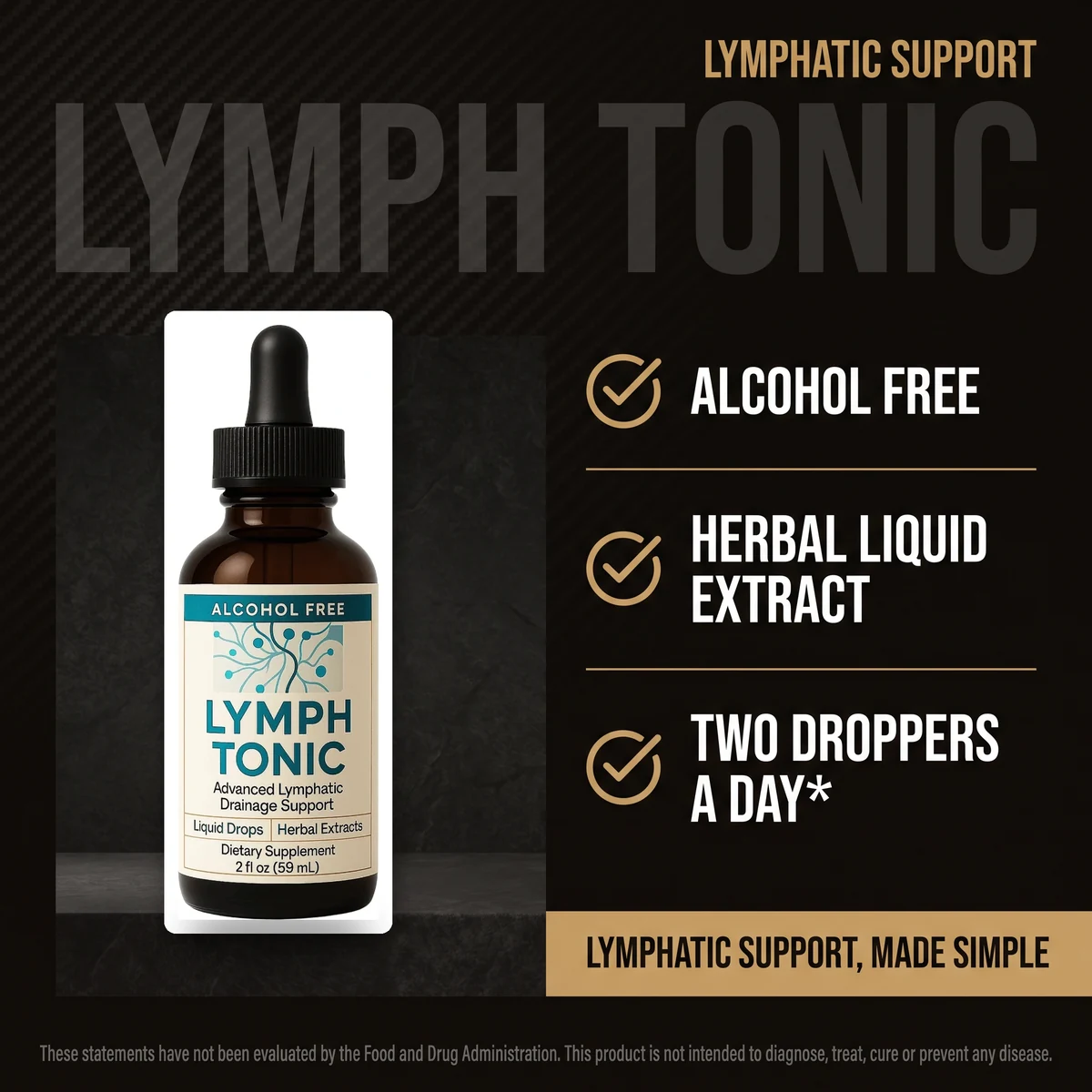
No supplement replaces a good night’s sleep, and LymphTonic is not a sedative. But a calm, consistent evening ritual is one of the most reliable ways to sleep better — and building a simple, alcohol-free botanical dropper into that wind-down can be part of the cue that tells your body the day is done. The LymphTonic 600 mg blend pairs flavonoids like quercetin and hesperidin with herbs such as Boswellia, curcumin and ginger, traditionally associated with antioxidant support and a balanced inflammatory response. Because it is alcohol-free, it fits an evening routine without the harshness of an alcohol-based tincture. Think of it as a complement to good sleep hygiene, not a substitute for it. For the full daily picture, our guide to supporting lymphatic drainage naturally ties movement, hydration, breathing and botanicals together.
Make your evening routine effortless
LymphTonic is an alcohol-free daily dropper of thirteen botanicals traditionally linked to circulation, drainage and antioxidant support — an easy addition to your wind-down. Backed by a 60-day money-back guarantee.
See LymphTonic Packages
A simple wind-down for better overnight recovery
Put the pieces together and an ideal evening is refreshingly low-effort. About an hour before bed, dim the lights and put the screens away. Take your LymphTonic drops as part of the ritual. Do a few minutes of slow belly breathing or light stretching to release the day. Keep the bedroom cool and dark, set a consistent lights-out time, and prop your head slightly to help overnight drainage. Then let your body’s cleanup crew do what it does best. Give any new routine a few weeks of consistency, and remember that individual results vary and are not guaranteed — but better sleep pays dividends across almost everything.
The glymphatic research behind the overnight story
The glymphatic claim on this page is not a wellness metaphor, and it has a specific origin. The 2013 study that named the effect showed that during sleep the interstitial space in the brain expands and the clearance of metabolic waste rises sharply compared with the waking state (Sleep drives metabolite clearance from the adult brain, Science, 2013). More recent work has identified part of the machinery: slow, noradrenaline-driven vasomotion appears to be what actually pumps fluid through the system during sleep, which explains why fragmented sleep and stimulant-heavy evenings blunt it (Norepinephrine-mediated slow vasomotion drives glymphatic clearance during sleep, Cell, 2025).
None of this makes sleep a "detox" you can buy, and none of it changes the boring practical answer: enough hours, consistently. The National Sleep Foundation's consensus recommendations put most adults at roughly seven to nine hours a night, arrived at through a formal expert process rather than a headline (National Sleep Foundation's updated sleep duration recommendations: final report, Sleep Health, 2015). What you see the morning after a short night is mostly fluid, which is the subject of why your face is puffy in the morning. The two habits that most reliably wreck the window are the ones covered in stress, water retention and bloating and in premenstrual puffiness, where poor sleep and hormonal fluid shifts compound each other.
Frequently asked questions
How does sleep help your body detox?
Sleep is when much of the body’s routine housekeeping happens. During deep sleep the brain’s glymphatic system becomes more active, clearing metabolic waste, while the liver, kidneys and lymphatic system continue their normal filtering and repair. Sleep is not a special detox event you can buy — it is the built-in overnight maintenance window your body relies on.
Why do I feel puffy and sluggish after a bad night’s sleep?
Poor or short sleep disrupts overnight fluid regulation and repair, so you can wake puffier — especially around the face and eyes — and feel foggy. It also nudges hunger and stress hormones in unhelpful directions. Consistent, good-quality sleep is one of the most effective everyday supports for feeling less sluggish.
Does sleeping position affect overnight detox and puffiness?
Position affects fluid drainage. Sleeping on your back with your head slightly elevated lets gravity help drain fluid from the face overnight, so you wake less puffy. Good sleep quality and enough hours matter far more than any single position, though.
Can supplements support sleep and overnight recovery?
The foundations are sleep hygiene, a consistent schedule and limiting late caffeine and alcohol. Some people also use botanicals traditionally associated with calm and antioxidant support. LymphTonic’s alcohol-free blend includes flavonoids and herbs traditionally linked to circulation and a balanced inflammatory response, meant to complement good sleep habits rather than act as a sedative.
How many hours of sleep support the body’s cleanup best?
Most adults do best with roughly seven to nine hours a night, with enough uninterrupted time to cycle through the deep-sleep stages where clearance and repair peak. Consistency — similar bed and wake times — matters as much as the total.
- National Institute of Neurological Disorders and Stroke — Brain basics: understanding sleep.
- Centers for Disease Control and Prevention — About sleep and health.
- National Center for Complementary and Integrative Health — Detoxes and cleanses: what you need to know.
- Science — Sleep drives metabolite clearance from the adult brain (2013, PMID 24136970).
- Cell — Norepinephrine-mediated slow vasomotion drives glymphatic clearance during sleep (2025, PMID 39788123).
- Sleep Health — National Sleep Foundation's updated sleep duration recommendations: final report (2015, PMID 29073398).
† These statements have not been evaluated by the FDA. This product is not intended to diagnose, treat, cure or prevent any disease. This article is for general information only and is not medical advice.