The Best Foods to Reduce Water Retention and Puffiness Naturally
| Eat more of | Potassium-rich foods (banana, leafy greens, avocado, sweet potato, beans) and water-rich produce (cucumber, watermelon, celery, citrus). |
| Eat less of | Processed, salty foods — packaged snacks, deli meats, canned soups, fast food and salty sauces. |
| The balance that matters | More potassium, less sodium, steady water and plenty of fibre — that combination is what nudges the body to release held water. |
If you have ever woken up puffier after a takeaway dinner, or watched your rings feel tight on a salty travel day, you have seen how much diet drives fluid. The best foods to reduce water retention are not exotic or expensive — they are ordinary whole foods that shift the balance of two minerals in your body: sodium and potassium. Get that balance right, stay hydrated, and eat enough fibre, and mild puffiness usually eases within a day or two. This guide covers exactly which foods help, which ones to dial back, and how to build a simple anti-puffiness plate.
Why your body retains water in the first place
Water retention — the mild, everyday kind — is mostly a story about sodium and potassium. Sodium pulls water and holds on to it; potassium helps your kidneys release excess sodium and, with it, excess water. Modern eating tips the scales heavily toward sodium: processed and restaurant foods are loaded with it, while most people fall short on potassium-rich produce. The result is a body primed to hold water, which shows up as puffiness in the face, fingers, ankles and belly.
Fibre and hydration play supporting roles. A high-fibre diet steadies digestion and blood sugar, and staying well hydrated reassures the body it does not need to hoard water. Put simply, the best foods to reduce water retention work by flipping that sodium-heavy ratio back toward balance.
The best foods to reduce water retention
Potassium-rich foods
Potassium is the single most useful nutrient for fluid balance because it directly counters sodium. Build meals around these:
- Leafy greens — spinach, Swiss chard, kale and rocket.
- Bananas — the classic portable potassium source.
- Avocado — potassium plus healthy fats and fibre.
- Sweet potato and regular potato — especially with the skin on.
- Beans and lentils — potassium, fibre and plant protein in one.
- Tomatoes — fresh or as an unsalted passata.
Water-rich fruits and vegetables
Foods that are mostly water hydrate you while you eat and are naturally low in sodium:
- Cucumber — over 95% water and a traditional de-puffing food.
- Watermelon and melon — hydrating and potassium-containing.
- Celery — crunchy, water-dense and low in calories.
- Citrus — oranges, grapefruit and lemon, rich in water and vitamin C.
- Berries — hydrating, high in antioxidants and flavonoids.
Foods and drinks traditionally linked to fluid balance
Some everyday foods have a long traditional association with gentle fluid turnover:
- Asparagus — a classic culinary food for fluid balance.
- Ginger and garlic — warming, flavourful ways to season without salt.
- Dandelion leaf and parsley — herbs traditionally taken as teas for fluid balance.
- Hibiscus and green tea — hydrating herbal drinks rich in plant compounds.
These flavonoid- and mineral-rich foods pair naturally with the movement-and-hydration habits in our guide to supporting lymphatic drainage naturally. Diet and drainage are two levers on the same system.
The foods to dial back
Reducing water retention is as much about what you subtract as what you add. The biggest sources of hidden sodium are rarely the salt shaker — they are packaged and prepared foods:
- Processed and packaged snacks — crisps, salted nuts, crackers and instant noodles.
- Cured and deli meats — bacon, ham, salami and hot dogs.
- Canned soups and sauces — often surprisingly high in sodium.
- Fast food and much restaurant food — portions and seasoning add up fast.
- Salty condiments — soy sauce, ketchup, salad dressings and stock cubes.
You do not need to fear salt entirely — your body needs some sodium. The goal is simply to shift the ratio: fewer ultra-processed sources, more whole foods. Excess alcohol and very high refined-carbohydrate meals can also nudge you toward holding water, so keep those in check too.
A word on “detox teas” and diuretic pills
It is tempting to reach for a “detox tea” or an over-the-counter water pill when you feel puffy, but these are usually the wrong tool for everyday water retention. Many detox teas act as harsh laxatives rather than genuinely addressing fluid balance, and leaning on diuretics can push the body toward dehydration — which, as we have seen, actually makes it cling to more water in the long run and can throw off important minerals like potassium. Gentle, food-first strategies are both safer and more sustainable: a plate built around potassium-rich and water-rich whole foods does the job without the rebound. If you are considering any diuretic product, or your puffiness is persistent, talk to a pharmacist or clinician first — especially if you take medication or have a heart, kidney or blood-pressure condition.
Round out your anti-puffiness plate
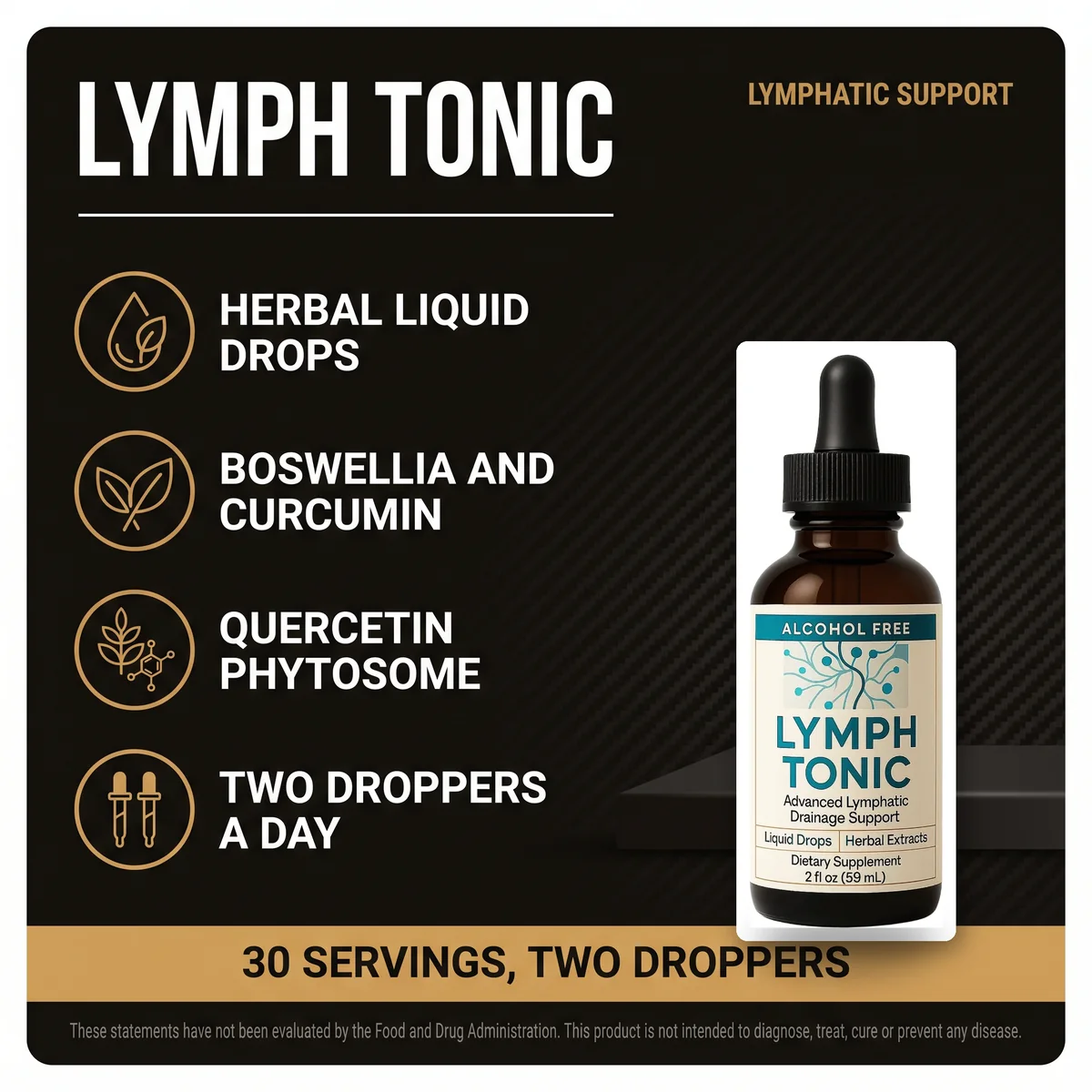
LymphTonic pairs botanicals traditionally linked to circulation and fluid balance — including quercetin, hesperidin and ginger — in one alcohol-free daily dropper. A simple complement to a whole-foods diet. Backed by a 60-day money-back guarantee.
See LymphTonic Packages
How to build a simple anti-puffiness day
You do not need a rigid meal plan — just tilt each meal toward whole foods. A realistic day might look like this. Breakfast: oats or yoghurt with berries and banana, plus a big glass of water. Lunch: a large leafy-green salad with beans or chicken, avocado and a squeeze of lemon instead of a salty dressing. Snack: cucumber, celery or an orange. Dinner: a hand-sized portion of protein, sweet potato or brown rice, and plenty of vegetables seasoned with herbs, garlic and lemon rather than salt. Throughout: sip water, and lean on herbal teas like hibiscus or green tea.
If your puffiness shows up most in your face first thing in the morning, our guide on why your face is puffy in the morning covers the overnight side of the equation, and if it settles in your lower legs, see why your legs feel heavy and swollen.
Where a botanical supplement fits
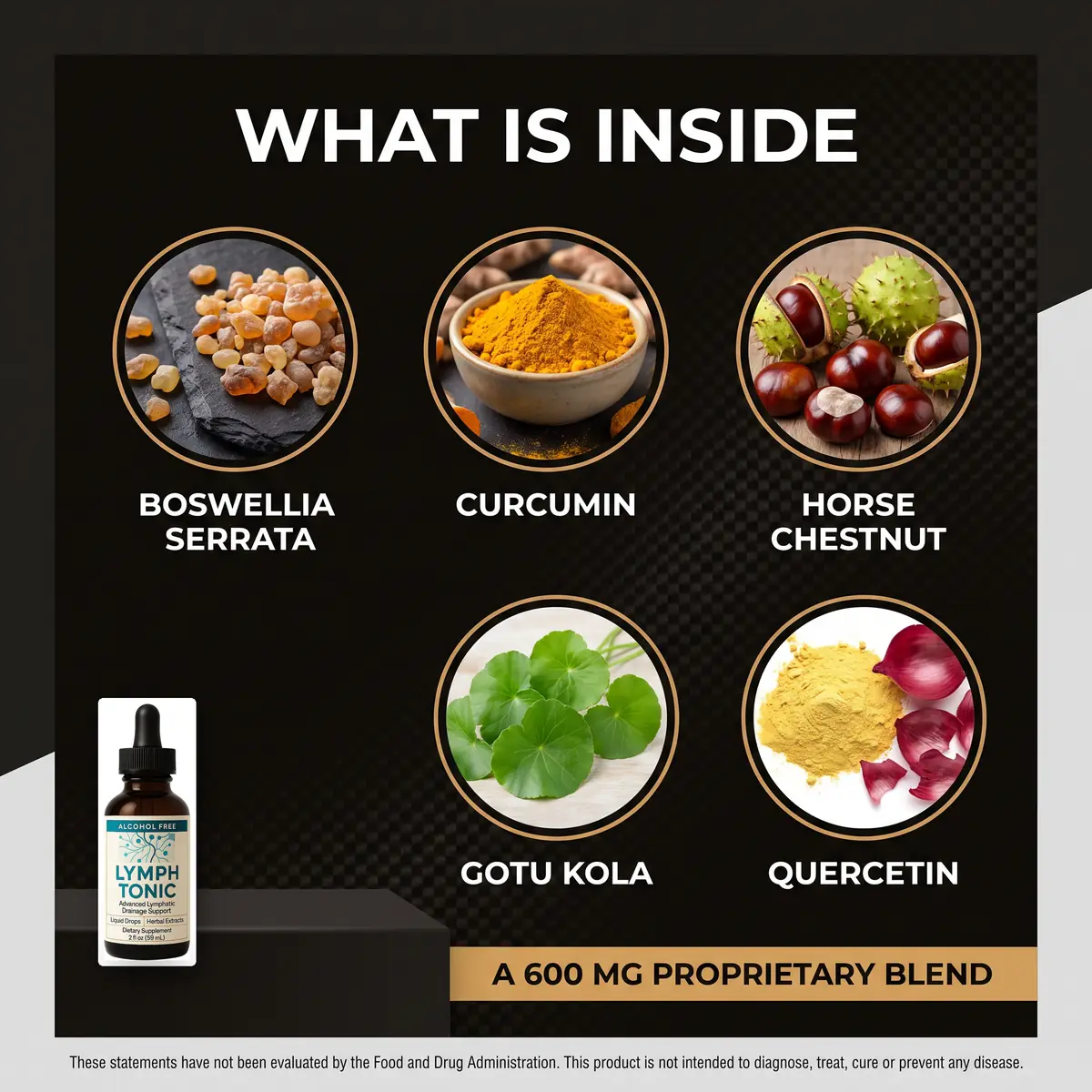
Food does the heavy lifting, but a few botanicals have a long traditional association with circulation and fluid balance and can round out a whole-foods diet. The LymphTonic 600 mg blend includes quercetin phytosome and hesperidin (plant flavonoids valued for capillary strength), ginger (a warming circulation botanical), and horse chestnut and gotu kola (traditionally taken for healthy legs and microcirculation). Think of it as the layer on top of your plate — not a substitute for eating well. Give any natural approach several weeks of consistency, and remember that individual results vary and are not guaranteed.
The evidence behind the sodium and potassium balance
The single best-tested dietary lever on fluid balance is the ratio between the sodium you eat and the potassium you eat. The DASH-Sodium trial fed participants controlled diets at three sodium levels and found that lowering sodium produced stepwise falls in blood pressure, with the largest effect when a potassium-rich eating pattern was in place at the same time (Effects on blood pressure of reduced dietary sodium and the DASH diet, The New England Journal of Medicine, 2001). A later dose-response meta-analysis of randomised trials confirmed the other half of the equation: increasing potassium intake lowers blood pressure in a graded way (Potassium Intake and Blood Pressure: A Dose-Response Meta-Analysis of Randomized Controlled Trials, Journal of the American Heart Association, 2020).
Salt is not simply "water in, water out" either. Controlled human balance studies show that a high salt load pushes the body into an energy-costly conservation mode, reorganising osmolyte handling rather than just flushing sodium away (High salt intake reprioritizes osmolyte and energy metabolism for body fluid conservation, The Journal of Clinical Investigation, 2017) — which is why a salty weekend can leave a mark for days rather than hours. Two other levers sit alongside the plate: the hormonal swing covered in why you feel puffy before your period, and the rebound described in how alcohol causes water retention and bloating. Heat adds a third, which is the subject of why you retain water in hot weather.
Frequently asked questions
What foods reduce water retention the fastest?
Potassium-rich foods like bananas, leafy greens, avocado, sweet potato and beans help balance sodium and encourage the body to release excess water, while water-rich produce such as cucumber, watermelon, celery and citrus support gentle fluid turnover. Pairing more of these with less processed, salty food usually makes a difference within a day or two.
Does drinking more water reduce water retention?
Often, yes. When you are under-hydrated, the body holds on to the water it has. Drinking steadily through the day signals that water is plentiful, which supports normal fluid balance. Pair good hydration with less salt and more potassium-rich produce for the best effect.
Which foods make water retention worse?
Highly processed and salty foods are the main culprits — packaged snacks, cured and deli meats, canned soups, fast food and salty sauces. Very high refined-carbohydrate meals and excess alcohol can also nudge the body toward holding more water.
Are there herbs traditionally used for fluid balance?
Yes. Dandelion leaf, parsley, hibiscus, ginger and green tea are traditionally associated with healthy fluid balance, and flavonoids such as quercetin and hesperidin are valued for capillary and circulation support. Some of these botanicals appear in LymphTonic, meant to complement a whole-foods diet rather than replace it.
How long until diet changes reduce puffiness?
Mild, salt-driven puffiness often eases within a day or two of shifting toward whole foods, more potassium and steady hydration. Persistent swelling, one-sided swelling or swelling with pain or shortness of breath is different and should be checked by a clinician.
- Harvard T.H. Chan School of Public Health — Potassium and sodium balance.
- American Heart Association — How much sodium should you eat per day?
- National Center for Complementary and Integrative Health — Ginger: what the science says.
- The New England Journal of Medicine — Effects on blood pressure of reduced dietary sodium and the Dietary Approaches to Stop Hypertension (DASH) diet (2001, PMID 11136953).
- Journal of the American Heart Association — Potassium Intake and Blood Pressure: A Dose-Response Meta-Analysis of Randomized Controlled Trials (2020, PMID 32500831).
- The Journal of Clinical Investigation — High salt intake reprioritizes osmolyte and energy metabolism for body fluid conservation (2017, PMID 28414295).
† These statements have not been evaluated by the FDA. This product is not intended to diagnose, treat, cure or prevent any disease. This article is for general information only and is not medical advice.