Signs of a Sluggish Lymphatic System - and How to Get It Moving
| Common signs | Morning puffiness, heavy or swollen legs, frequent bloating, dull skin, tiredness and fluid that shifts with sitting, salt or heat. |
| Why it happens | Lymph has no pump - it relies on your movement, breathing and hydration, so sitting still, salt and poor sleep slow it down. |
| Get it moving | Move often, hydrate, breathe deeply, keep salt moderate, sleep well, and add gentle massage, dry brushing or supportive botanicals. |
If you regularly feel puffy, heavy, bloated or just a bit “stagnant,” you may have searched for the signs of a sluggish lymphatic system. The lymphatic system is your body’s quiet drainage and waste-clearing network, and unlike your heart it has no pump of its own. That single fact explains most of what people notice: when you are not moving, hydrating or breathing well, lymph moves slowly, and fluid lingers where you would rather it did not. This guide walks through the everyday signs of a sluggish lymphatic system, the ordinary reasons it slows down, and the simple daily habits that help get it flowing again.

What the lymphatic system actually does
Your lymphatic system is a body-wide web of thin vessels, hundreds of small nodes, and lymph fluid that bathes your tissues. Every day it collects excess fluid, cellular waste and other debris from between your cells, filters it through the nodes, and returns the cleaned fluid to your bloodstream. It is central to fluid balance, immune surveillance and the everyday “housekeeping” we loosely call detox. Because it runs alongside your circulation but has no heart to drive it, lymph depends on outside help to keep flowing: the squeeze of your muscles as you walk, the pressure changes of deep breathing, and enough water in the system to keep everything fluid.
When those helpers are in short supply - a day at a desk, a salty dinner, too little water, a short night’s sleep - flow slows and fluid pools. That is what most people are describing when they talk about a sluggish or “congested” lymphatic system. It is usually a pattern of ordinary habits, not a disease, and it tends to respond to ordinary habits in return.
The everyday signs of a sluggish lymphatic system
No single symptom proves anything on its own, but when several of these show up together and shift with your daily routine, sluggish drainage is a reasonable everyday explanation:
- Morning puffiness. A fuller face or bags under the eyes on waking, because lying flat overnight lets fluid settle instead of draining. We cover this in detail in why is my face puffy in the morning.
- Heavy, swollen or achy legs. Especially by evening, after long sitting or standing, or in hot weather - our guide to why legs feel heavy and swollen explains the mechanism.
- Frequent bloating and water retention. A waistband that feels tighter some days, or rings and shoes that fit differently by evening.
- Dull, puffy-looking skin. Fluid held in the tissues can leave skin looking less defined and less bright.
- Tiredness and a foggy head. Poor fluid clearing and the same habits that slow lymph (short sleep, dehydration) often leave you feeling sluggish overall.
- Swelling that comes and goes. Fluid that shifts with how long you have been sitting, what you ate, the weather, or your menstrual cycle is a classic everyday drainage pattern.
- Mild, temporary tenderness around the neck, armpits or groin after being run down, where clusters of lymph nodes sit.
The key word throughout is everyday. These signs of a sluggish lymphatic system are the reversible, come-and-go kind that track with your habits. Swelling that is sudden, severe, painful, affects only one limb, or does not settle is a different situation and deserves prompt medical attention.
Why the lymphatic system slows down
Understanding the causes makes the fixes obvious, because each cause points straight at a habit you can change.
Not enough movement
This is the big one. Lymph is pushed along largely by the contraction of your skeletal muscles, especially the calf muscles, which act like a second pump for the lower body. Sit still for hours and that pump goes quiet, so fluid settles in the legs and feet. If you work at a desk, our article on how sitting all day affects circulation shows exactly what happens and how to counter it.
Dehydration
Lymph is mostly water. When you are short on fluid, the body holds on to what it has and everything moves more thickly. Steady hydration through the day keeps lymph fluid and easier to move.
A very salty diet
High sodium tells the body to retain water, which shows up as puffiness and heaviness. Balancing salt with potassium-rich, water-rich whole foods helps - see our roundup of the best foods to reduce water retention.
Shallow breathing
The largest lymphatic vessel, the thoracic duct, runs up through the chest, and the pressure swings of deep diaphragmatic breathing help draw lymph upward and back into circulation. A day of shallow, chest-only breathing at a screen offers far less of that gentle pumping.
Poor sleep and chronic stress
Much of the body’s fluid regulation and repair happens overnight, so short or broken sleep leaves you puffier and more sluggish - a link we explore in how sleep helps your body detox. Ongoing stress adds to the picture by nudging fluid-retaining hormones in the wrong direction.

How to get a sluggish lymphatic system moving again
Because the causes are lifestyle levers, so are the fixes. None of these is dramatic on its own; done together and consistently, they add up.
1. Break up sitting with movement. Aim to move for a few minutes every 30 to 60 minutes. A short walk, a set of calf raises at your desk, or a lap of the office all restart the muscle pump. Any movement anywhere helps - the lymphatic system does not care how elegant it is.
2. Hydrate steadily. Sip water across the day rather than gulping it all at once. Water-rich foods such as cucumber, melon and leafy greens count too.
3. Breathe deeply on purpose. A few rounds of slow belly breathing - in through the nose, letting the stomach expand, out slowly - a few times a day gives the thoracic duct a gentle assist.
4. Try gentle lymphatic self-massage or dry brushing. Light, slow strokes toward the nearest lymph nodes (legs toward the groin, arms toward the armpits, face toward the neck) can encourage flow. Dry brushing before a shower is a popular version of the same idea; see our full guide to dry brushing for lymphatic drainage.
5. Keep evening salt moderate and legs elevated. Go lighter on sodium at dinner, and put your feet up for ten minutes in the evening to let gravity help clear the day’s fluid.
6. Protect your sleep. Consistent, sufficient sleep is when much of the overnight fluid clearing happens.
Support drainage from the inside out
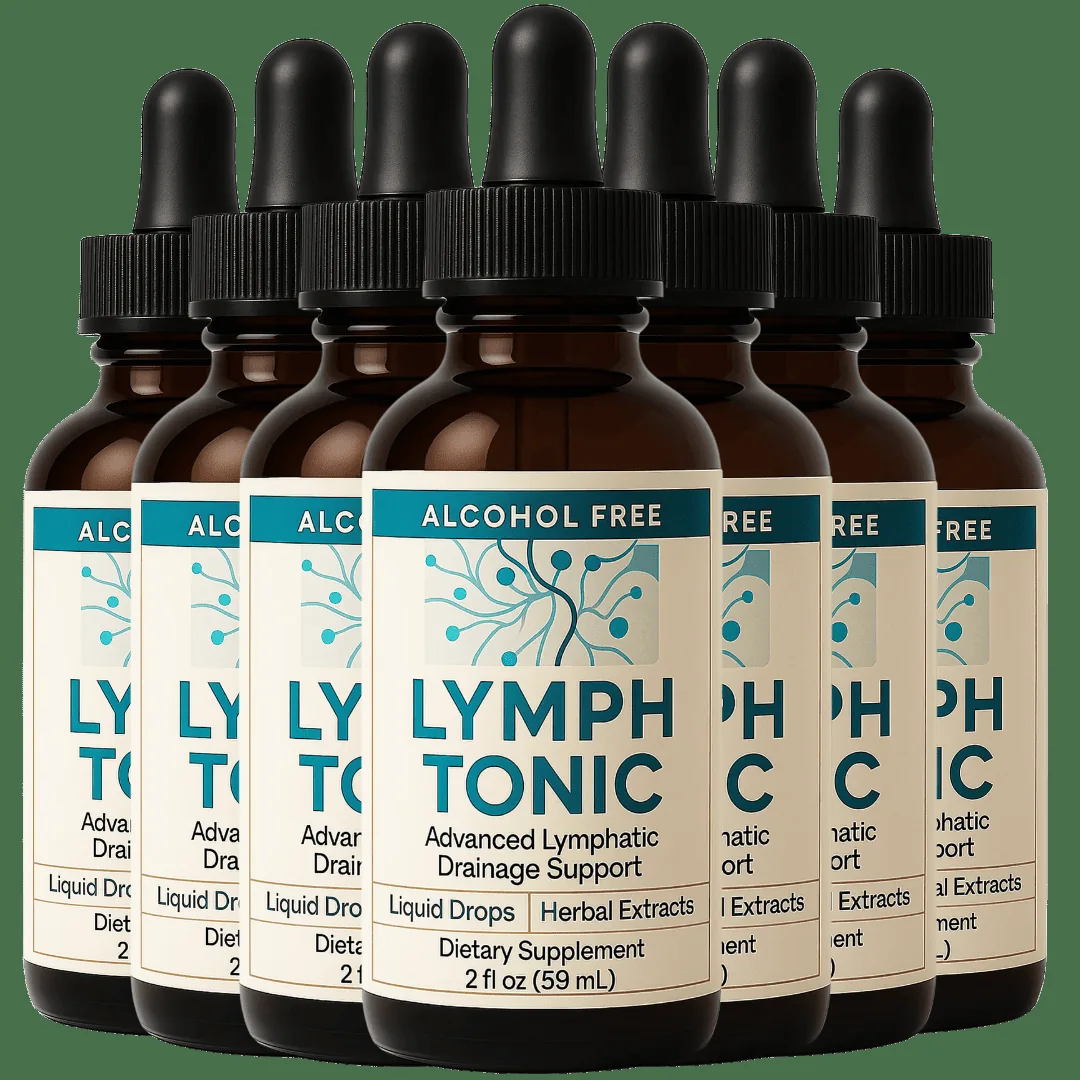
LymphTonic pairs thirteen botanicals traditionally linked to circulation and lymphatic flow - including quercetin, gotu kola, horse chestnut and ginger - in one alcohol-free daily dropper. A simple companion to the movement, hydration and sleep habits above. Backed by a 60-day money-back guarantee.
See LymphTonic Packages
Where a daily botanical fits in
No supplement replaces movement, water and sleep - those are the foundation, and nothing works as well without them. What a well-formulated botanical can do is sit alongside those habits as a consistent daily ritual. LymphTonic is an alcohol-free liquid you take as two droppers a day, built around plants that traditional and general use have long linked to healthy circulation and fluid balance: quercetin and hesperidin (flavonoids associated with vessel and capillary support), gotu kola and horse chestnut (traditionally used for leg comfort and circulation), plus ginger, boswellia and curcumin. Think of it as the easy, repeatable part of a routine whose real engine is how you move, hydrate and rest. For the complete picture, our overview of how to support lymphatic drainage naturally ties every lever together, and you can learn more about the formula on the LymphTonic homepage.
When sluggish drainage needs a closer look
Everyday puffiness and heaviness that come and go with your habits are usually nothing to worry about. But treat swelling as a reason to see a clinician if it is sudden or severe, affects only one arm or leg, comes with pain, warmth, redness or skin changes, does not go down at all, or appears alongside a known heart, kidney, thyroid or liver condition. Swelling with shortness of breath or chest discomfort needs urgent care. This article covers ordinary, everyday drainage patterns and is educational information, not medical advice.
How clinicians actually assess lymphatic function
"Sluggish lymph" is a wellness phrase, not a diagnosis, and it is worth knowing what sits behind the real version. Lymph circulation has been characterised in physiological and biomechanical terms for decades — flow depends on vessel contractility, tissue pressure and external compression rather than on any single organ working harder or slower (Lymph circulation: physiology, pharmacology, and biomechanics, Critical Reviews in Biomedical Engineering, 1986). When lymphatic transport genuinely fails, it has a name and a well-described clinical picture: secondary lymphoedema, reviewed at length as a disease primer (Cancer-associated secondary lymphoedema, Nature Reviews Disease Primers, 2019).
The distinction matters because the treatments are not interchangeable. A systematic review of lymphoedema guidelines sets out the accepted approach — assessment, compression, skin care, exercise and supervised drainage techniques — none of which is a supplement or a brush (Guidelines Relevant to Diagnosis, Assessment, and Management of Lymphedema: A Systematic Review, Advances in Wound Care, 2023). If your swelling is one-sided, persistent, pitting or progressive, that is the pathway you want, not a routine tweak. If it is the everyday end-of-day puffiness most readers mean, the practical levers are in why legs feel heavy and swollen, in how much water to drink to reduce water retention, and in the skin-and-ritual habits assessed honestly in dry brushing for lymphatic drainage.
Frequently asked questions
What are the signs of a sluggish lymphatic system?
Common everyday signs include morning puffiness in the face or under the eyes, heavy or swollen legs by evening, frequent bloating, feeling tired and foggy, skin that looks dull or holds fluid, and swelling that comes and goes with long sitting, salty meals or hot weather. These are general, everyday patterns rather than a diagnosis - persistent or one-sided swelling should be checked by a clinician.
What causes the lymphatic system to slow down?
The lymphatic system has no central pump, so it relies on your movement, muscle contractions and breathing to push fluid along. Long hours of sitting or standing still, dehydration, a very salty diet, poor sleep and chronic stress all reduce that natural pumping and can leave lymph moving sluggishly.
How do I get my lymphatic system moving again?
Move often throughout the day, even short walks and calf raises; stay well hydrated; breathe deeply; keep evening salt moderate; sleep well; and consider gentle lymphatic massage or dry brushing. Botanicals traditionally linked to circulation and fluid balance, like those in LymphTonic, can round out these daily habits.
Is a sluggish lymphatic system serious?
Everyday sluggishness that comes and goes with sitting, salt or heat is usually a lifestyle pattern, not a medical problem, and responds to daily habits. However, swelling that is sudden, severe, painful, one-sided, or does not go down should be evaluated by a healthcare professional, as it can signal a condition that needs treatment.
How long does it take to feel a difference?
Many people notice less evening puffiness within a week or two of moving more, hydrating and cutting back evening salt, because these act quickly on fluid balance. Building a steadier baseline takes consistency over several weeks - it is the daily repetition, not any single day, that matters.
- Cleveland Clinic — Lymphatic system: function and drainage.
- National Cancer Institute — Lymphatic system: definition and role.
- Cleveland Clinic — Edema (fluid swelling): overview.
- Critical Reviews in Biomedical Engineering — Lymph circulation: physiology, pharmacology, and biomechanics (1986, PMID 3524994).
- Nature Reviews Disease Primers — Cancer-associated secondary lymphoedema (2019, PMID 30923312).
- Advances in Wound Care — Guidelines Relevant to Diagnosis, Assessment, and Management of Lymphedema: A Systematic Review (2023, PMID 35196892).
† These statements have not been evaluated by the FDA. This product is not intended to diagnose, treat, cure or prevent any disease. This article is for general information only and is not medical advice.