How Much Water Should You Drink to Reduce Water Retention?
| The paradox | Drinking more water usually reduces water retention - dehydration makes the body hoard fluid and puff up. |
| How much | Roughly 2-2.7 L a day for women and 2.5-3.7 L for men from all sources; aim for pale-yellow urine. |
| The smart way | Sip steadily through the day, front-load earlier, add water-rich foods, and balance salt with potassium. |
It is one of the most counterintuitive tips in the whole wellness world: if you feel puffy and swollen, the answer is usually to drink more water, not less. So how much water should you drink to reduce water retention? This guide answers that directly - with realistic daily targets - and explains why being under-hydrated actually makes you hold on to fluid, how to hydrate the smart way, and why water intake works best alongside a few other simple habits.
Why dehydration causes water retention
Your body treats water as a resource it cannot afford to run out of. When you consistently drink too little, it shifts into conservation mode: the hormone signals that govern fluid balance tell the kidneys to hold on to water, and the body stores more of it in the tissues as a protective reserve. Ironically, that stored fluid is exactly the puffiness you are trying to get rid of. The body would rather look a little swollen than risk dehydration.
When you drink enough, you send the opposite message. The body no longer needs to hoard, so it lets go of the reserve it was clinging to, and the kidneys can do their normal job of flushing out excess sodium and waste. That is why people who increase their water intake often notice they feel less bloated within a few days, not more. Water is also the medium your lymphatic system moves in - lymph is mostly water - so being well hydrated keeps that drainage network fluid and easier to move, a theme we cover in how to support lymphatic drainage naturally.
How much water to drink to reduce water retention
There is no single number that fits everyone, but there are sensible ranges. A widely cited general guide suggests total daily fluid of roughly 2 to 2.7 litres (about 8 to 11 cups) for women and about 2.5 to 3.7 litres (10 to 15 cups) for men - and crucially, that figure is from all sources: plain water, other drinks, and the water in food. You do not have to hit it with a water bottle alone.
Then adjust for your reality. You need more if you are larger, physically active, sweating, pregnant, breastfeeding, or in hot weather, and less if you are smaller or more sedentary. Some health conditions require fluid to be limited, so those come first. The easiest practical gauge, though, is not a number at all: aim for pale straw-coloured urine. Dark yellow means drink more; consistently clear means you can ease off. Your body reads this better than any calculator.
How to hydrate the smart way
How you drink matters as much as how much. A few tweaks make hydration work for you rather than against you.
1. Sip steadily, do not chug. Drinking a huge volume at once mostly gets flushed straight out and can leave you feeling temporarily bloated. Spreading intake through the day keeps you evenly hydrated and lets the body actually use the water.
2. Front-load earlier in the day. Get most of your fluid in during the morning and afternoon, then taper in the evening so you are not drinking heavily right before bed. This keeps you hydrated without waking overnight or waking puffy.
3. Eat your water. Cucumber, melon, oranges, tomatoes, lettuce and soups are mostly water and come with potassium and fibre that support fluid balance too.
4. Balance salt with potassium. Sodium tells the body to hold water; potassium helps counter it. Pairing steady hydration with potassium-rich produce is a powerful combination - see our roundup of the best foods to reduce water retention.
5. Go easy on the things that dry you out. Alcohol and large amounts of caffeine nudge you toward dehydration and disturb fluid balance, so moderate them if puffiness is a regular problem.
Can you drink too much water?
Yes, though it is uncommon for most people going about their day. Forcing very large volumes very quickly can leave you feeling waterlogged, and in rare extreme cases - typically endurance athletes drinking enormous amounts - it can dangerously dilute blood sodium. The takeaway is not to fear water but to be sensible: steady and moderate beats heroic gulping. For everyday puffiness, consistent hydration to a pale-yellow urine is the target, not litres forced down in one sitting.
Why hydration alone is not the whole answer
Drinking enough is foundational, but water only helps if the fluid keeps moving. That is where the rest of your routine comes in. Movement is essential, because your muscles pump lymph and blood back up from the legs - if you sit all day, even perfect hydration will pool at your ankles, as we explain in how sitting all day affects circulation. Keeping evening salt moderate stops you undoing your good hydration overnight. And if puffiness is a near-daily thing rather than an occasional one, it is worth reviewing the wider picture, including whether you notice the other signs of a sluggish lymphatic system.
Add a daily botanical to your hydration habit
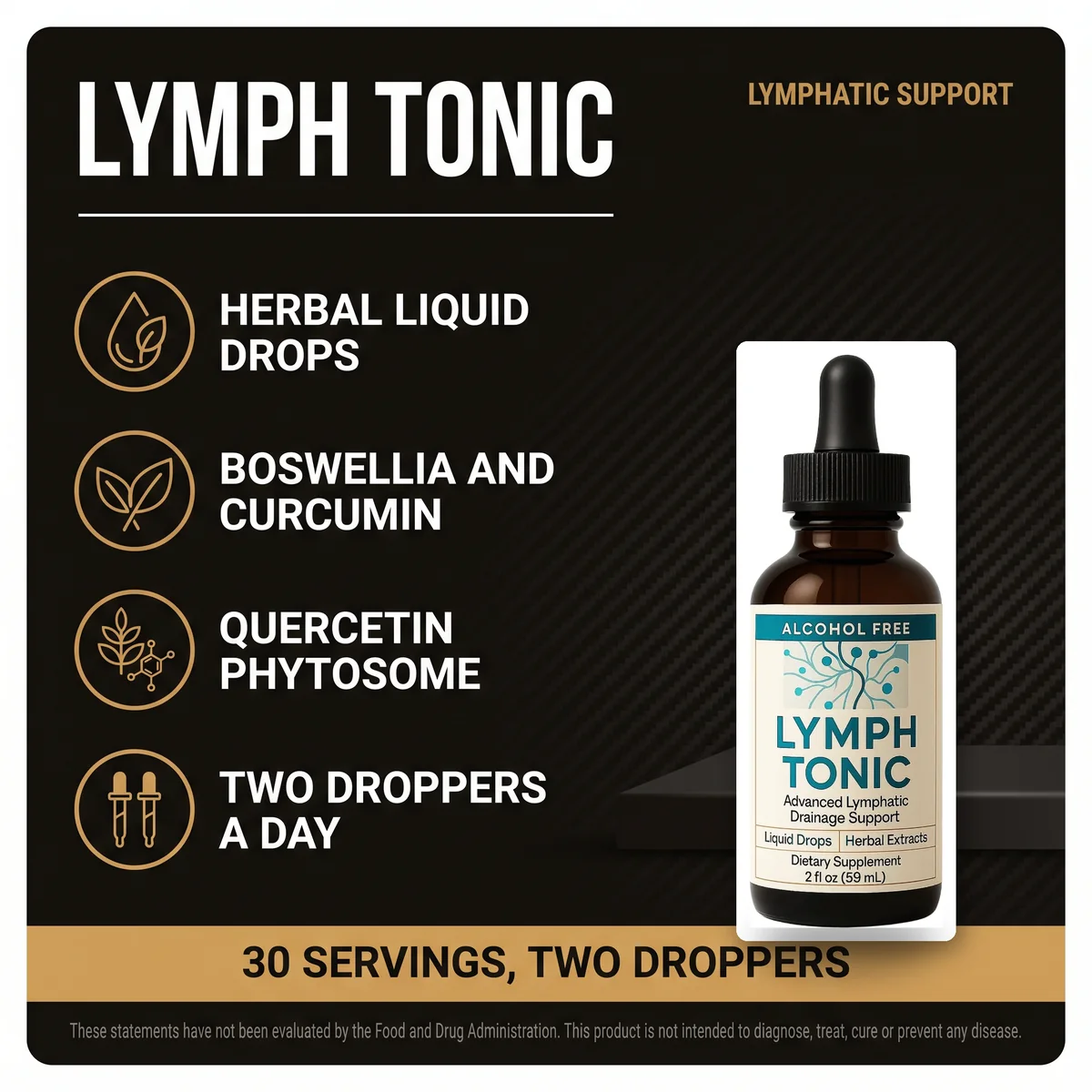
LymphTonic is an alcohol-free liquid you can take with your morning water, bringing together thirteen botanicals traditionally linked to circulation and fluid balance - including quercetin, gotu kola, horse chestnut and ginger. A simple companion to steady hydration. Backed by a 60-day money-back guarantee.
See LymphTonic Packages
Where LymphTonic fits in
Think of your anti-puffiness routine as a short stack: drink enough water, move often, keep salt moderate, sleep well, and add an easy daily ritual on top. LymphTonic is designed to be that ritual - two droppers of an alcohol-free botanical liquid you take with water each day, built around plants long associated in traditional and general use with healthy circulation and fluid balance. It does not replace hydration; it rides alongside it. You can read more about the full formula and how to use it on the LymphTonic homepage.
When water retention needs a closer look
Everyday puffiness that eases with better hydration, movement and moderate salt is common and harmless. But see a clinician if swelling is sudden, severe, painful, one-sided, or does not go down, if it is accompanied by shortness of breath, or if you have a known heart, kidney, liver or thyroid condition - some of these require fluid intake to be managed carefully rather than increased. This article is general information, not medical advice.
How hydration research frames the drink-more advice
"Drink more water to hold less water" sounds like folk wisdom, but the hydration literature gives it a sensible shape. Research comparing habitually low and high water consumers describes two genuinely different physiological states, with low consumers running at a higher vasopressin tone — the same water-conserving hormone that makes your body cling to fluid (Distinguishing Low and High Water Consumers - A Paradigm of Disease Risk, Nutrients, 2020). Work on 24-hour hydration status sets out how that status is actually assessed and what a normal daily pattern looks like, which is a better guide than any single glass count (24-h hydration status: parameters, epidemiology and recommendations, European Journal of Clinical Nutrition, 2003).
The caffeine worry is largely misplaced. A review of caffeine ingestion and fluid balance concluded that ordinary caffeinated drinks do not produce the fluid deficits the "coffee dehydrates you" line implies (Caffeine ingestion and fluid balance: a review, Journal of Human Nutrition and Dietetics, 2003), so your morning coffee still counts toward the day. What does move the needle is the sodium sitting alongside the water, which is why this pairs with the foods that reduce water retention. Heat raises your requirement sharply, as covered in why hot weather makes you retain water, and the sharpest short-term disruption to fluid balance is the one described in how alcohol drives rebound water retention.
Frequently asked questions
Does drinking more water reduce water retention?
Often, yes. When you are under-hydrated the body holds on to fluid as a protective reserve, which shows up as puffiness. Drinking enough water reassures the body it can release what it is storing, and it also helps the kidneys flush excess sodium. Steady hydration usually reduces retention rather than adding to it.
How much water should I drink to reduce water retention?
A common general target is around 2 to 2.7 litres a day for women and about 2.5 to 3.7 litres for men from all drinks and food combined, adjusted for your body size, activity, heat and health. A simple practical guide is to drink enough that your urine stays pale yellow. Sip steadily through the day rather than gulping large amounts at once.
Can drinking too much water cause bloating?
Drinking very large amounts very quickly can leave you feeling temporarily bloated and, in rare extremes, dilute blood sodium dangerously. For everyday purposes the goal is steady, moderate hydration across the day, not forcing litres at once. Spread your intake and let thirst and urine colour guide you.
What is the best way to hydrate to beat puffiness?
Sip water consistently through the day, front-load earlier so you are not drinking heavily right before bed, include water-rich foods, balance sodium with potassium-rich produce, and go easy on alcohol and excess caffeine. Pair steady hydration with movement so the fluid keeps circulating.
Do other drinks and food count toward my water intake?
Yes. General fluid targets include water from all beverages and from food. Water-rich fruits, vegetables and soups can contribute a meaningful share, so you do not have to reach your target with plain water alone - though plain water remains the simplest, calorie-free way to top up.
- U.S. National Academies of Sciences — Dietary reference intakes for water.
- Cleveland Clinic — How much water you need daily.
- Cleveland Clinic — Edema (fluid swelling): overview.
- Nutrients — Distinguishing Low and High Water Consumers - A Paradigm of Disease Risk (2020, PMID 32210168).
- European Journal of Clinical Nutrition — 24-h hydration status: parameters, epidemiology and recommendations (2003, PMID 14681708).
- Journal of Human Nutrition and Dietetics — Caffeine ingestion and fluid balance: a review (2003, PMID 19774754).
† These statements have not been evaluated by the FDA. This product is not intended to diagnose, treat, cure or prevent any disease. This article is for general information only and is not medical advice.